
In the bustling industrial estates of Ikeja, Agbara, and Ota, a quiet crisis is unfolding. It is not a crisis of capability; Nigerian pharmaceutical manufacturers are among the most resilient and resourceful in the world. It is not a crisis of demand—with a population of over 200 million, the market for essential medicines is vast and growing.
The crisis is one of process.
Walk into many of these facilities, and you will encounter a scene that feels frozen in time. Despite modern mixing vessels and high-speed blistering machines, the “nervous system” of the factory remains shockingly analog. Critical batch records travel on clipboards. Maintenance schedules are tracked in physical logbooks. Quality approvals rely on a signature on a piece of paper that can be lost, stained, or backdated.
For years, industry leaders have asked: Why? Why do sophisticated manufacturers, who invest millions in machinery, hesitate to digitize their operations?
The answer is not laziness, and it is not ignorance. To understand the “Paper Paradox,” we must look through the lens of Socio-Technical Transition Theory. We are stuck in a technological deadlock, and Huraflow—Nigeria’s first indigenous Manufacturing Execution System (MES) and Enterprise Asset Management (EAM) solution—was built specifically to break it.
The “Regime” of Paper: Why the Old Way is So Hard to Kill
According to transition theory, established technologies (like paper records) form a “Regime.” This is a rigid system of habits, infrastructure, and economic rules that protects the status quo.
In Nigeria, the “Paper Regime” is surprisingly durable because it evolved to survive our specific environment. It protected manufacturers from three historic pain points:
- Infrastructure Instability: In an era of unreliable power and non-existent internet, paper was the only “zero-downtime” interface. A clipboard doesn’t crash when the generator fails.
- The Skill Gap: For decades, the factory floor workforce was trained in manual logging. Digital systems were seen as complex, alien tools reserved for “white-collar” offices, not the production line.
- The “Foreign Tool” Mismatch: Nigerian companies that may want to digitize have to buy expensive European or American software. These systems demanded perfect Wi-Fi, 24/7 electricity, and payment in Dollars or Euros. When such infrastructure fails or the Naira crashes, the software becomes a liability.
So, manufacturers retreated to paper. It was messy and inefficient, but it was safe. It was the “devil they knew.”
But safety is an illusion. While the Regime remained static, the world outside—the Landscape—has shifted violently.
The Landscape Shift: The External Forces Crushing the Status Quo
The “Landscape” refers to the massive external pressures that no single company can control. Today, four seismic shifts are hitting the Nigerian pharmaceutical industry simultaneously. The “Paper Regime” can no longer withstand them.
- The Regulatory Tsunami (NAFDAC & Traceability)
The National Agency for Food and Drug Administration and Control (NAFDAC) is no longer asking for digitization; they are building a framework that demands it. The new emphasis on Global Trade Item Numbers (GTIN) and track-and-trace serialization is incompatible with paper. You cannot manually trace a single blister pack through a paper trail of 5,000 batch records in real-time. If a recall is necessary, a paper-based factory is flying blind. Paper puts your operating license at risk.
- The Data Integrity Mandate (ALCOA+)
Global Good Manufacturing Practices (GMP) now centre on Data Integrity. Auditors are looking for the “ALCOA+” standard: data must be Attributable, Legible, Contemporaneous, Original, and Accurate.
- Paper fails “Attributable”: Signatures can be forged.
- Paper fails “Contemporaneous”: Operators often fill out logs at the end of a shift rather than during the task.
- Paper fails “Accuracy”: Manual transcription errors are statistically inevitable.
The AfCFTA Export Opportunity
The African Continental Free Trade Area (AfCFTA) presents the biggest opportunity in a generation: the ability to export Nigerian medicines duty-free to Ghana, Kenya, South Africa, and beyond.
However, “Made in Nigeria” must equate to “Global Quality.” International buyers will audit your processes. If they see a factory running on loose paper sheets, they perceive risk. Digital batch records are not just about compliance; they are your passport to the continental market.
The Forex & Efficiency Crunch
With the volatility of the Naira and the rising cost of diesel and APIs, the margin for error has vanished. You cannot afford to lose 5% of your raw materials to waste or “leakage.” You cannot afford unplanned machine downtime because a paper maintenance log was ignored. You need real-time data to stop the bleeding.
The Failed Import: Why Silicon Valley Can’t Fix Ota
If the need is so urgent, why haven’t manufacturers just bought SAP, Oracle, Siemens, Rockwell or other global MES platforms? Because those tools were not built for us. Imported software operates on a “Level 3” assumption—that the environment is perfect. They assume stable high-speed internet. They assume a workforce fluent in complex UI/UX. Most critically, they assume you have an unlimited budget for Dollar-denominated licensing fees. When a Nigerian factory adopts these tools, they often fail. The internet cuts out, and production stops. The license renewal comes due when the exchange rate has spiked, destroying the budget. The software is rejected by the staff, and the factory slides back to paper.
Huraflow: The Indigenous Solution to a Global Problem
Huraflow by Symmex is the result of applying socio-technical thinking to software engineering. We didn’t just build an MES; we built a Transition Engine designed specifically for the Nigerian reality. It is the first integrated Manufacturing Execution System (MES) and Enterprise Asset Management (EAM) platform developed locally in Africa, for Africa. Here is how it bridges the gap:
- Built for the Infrastructure (The “Offline-First” Architecture)
We understand that internet connectivity in an industrial estate can be erratic. Huraflow is built with an “Offline-First” architecture.
If the network goes down, your factory keeps running. Operators continue to log batch data, maintenance teams continue to update checklists, and the system stores everything locally on the device. The moment connectivity is restored, Huraflow automatically syncs the data to the central server. No data loss. No downtime.
- Economic Alignment (The Naira Advantage)
Foreign software creates Forex exposure. Huraflow eliminates it. We are a Nigerian company, and our pricing is localized. You can plan your operational expenditure (OPEX) without waking up in a cold sweat about the exchange rate. We offer world-class technology without the capital flight.
- Integrated MES & EAM (Total Factory Visibility)
Most systems force you to buy one software for production (MES) and another for maintenance (EAM). This creates silos.
Huraflow integrates them. Why? Because a machine breakdown is a production issue.
- The Scenario: A tablet press is showing vibration anomalies.
- The Huraflow Way: The system flags the maintenance team automatically (EAM) and alerts the production manager that the batch schedule might be at risk (MES). It connects the health of your assets to the quality of your product.
- Regulatory Shielding (Compliance Native)
Huraflow is pre-configured for NAFDAC and GMP compliance.
- Digital Batch Records: It forces operators to enter data at the correct time. No backdating allowed.
- Audit Trails: Every click, edit, and approval is logged with a timestamp and user ID. When the auditor arrives, you don’t hand them a dusty binder; you give them a login to a pristine, searchable digital history.
- Inventory Control: Track APIs from the warehouse to the weighing room to the blister pack, ensuring zero leakage and full traceability.
The Transition Strategy: Moving from “Paper” to “Power”
The transition from paper to digital is not just a software install; it is a culture change. This is often the scariest part for a Plant Manager. Will my staff use it? Will it disrupt production?
At Symmex, we don’t just sell you a login; we partner with you on the Socio-Technical Transition.
- User-Centric Design: Huraflow’s interface is designed for the factory floor, not the IT department. It uses large buttons, clear visual cues, and simplified workflows that respect the operator’s environment.
- Phased Deployment: We don’t advocate for a “Big Bang” that shocks the system. We recommend starting with critical lines or specific modules (like electronic BMR, COA) before scaling to full automation.
- Local Support: When you need help, you aren’t emailing a support desk in California or Berlin. You are talking to a team in Lagos that understands your constraints and can be on-site when needed.
The Choice is Yours
The “Paper Regime” is comfortable, but it is a sinking ship. The winds of NAFDAC regulation, the currents of the AfCFTA market, and the tides of economic efficiency are all pushing in one direction: Digitization.
For too long, Nigerian manufacturers have had to choose between staying in the past with paper or gambling their future on unsuitable foreign software.
That choice is over.
Huraflow is the best option. It is the technology that respects where you are, while giving you the tools to get where you need to go. It is time to stop managing your factory with the tools of the 1980s. It is time to embrace the future of African manufacturing.
Symmex is ready to help you make the shift.
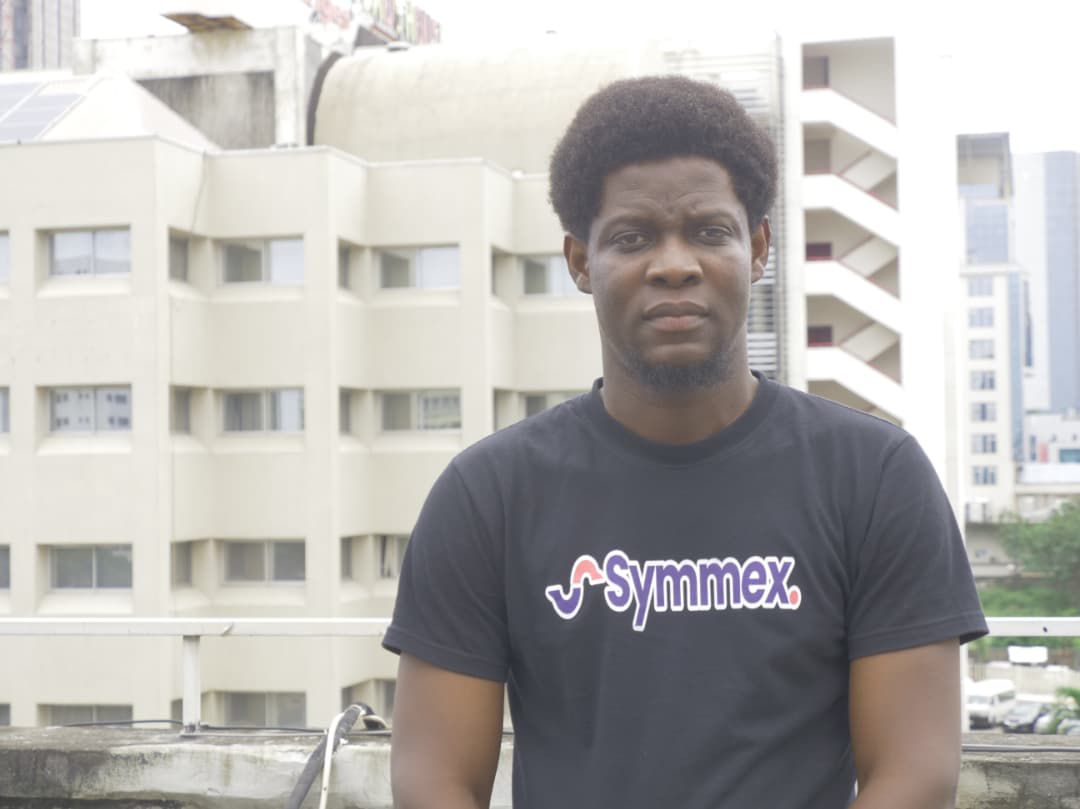
Olumide Awoyemi is Founder/CEO of Symmex, an industrial–technological solutions provider and developer of Huraflow.